Welsh Gold
The world's rarest and most sought-after gold
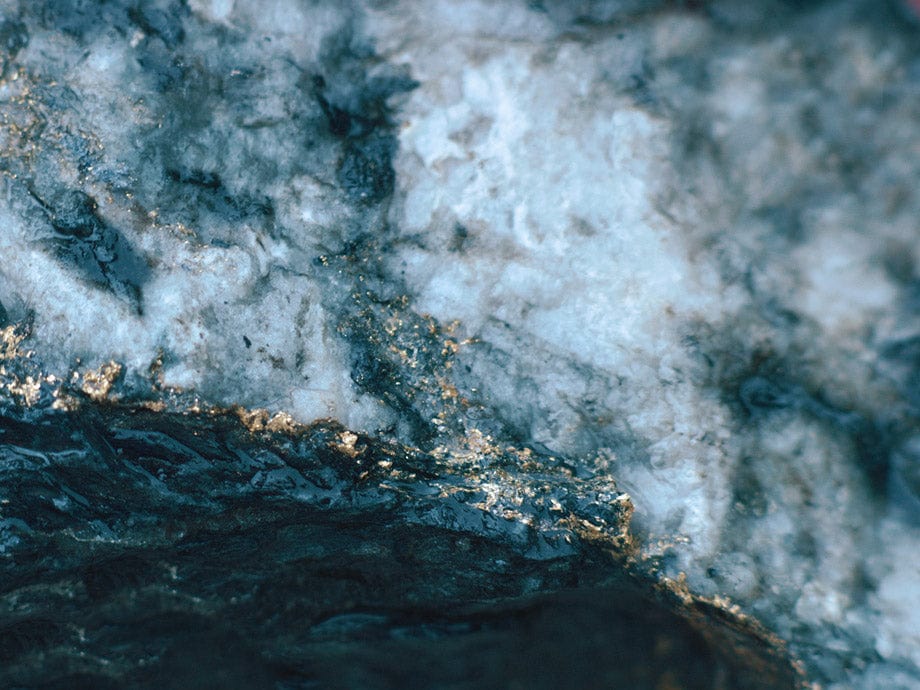
Welsh gold mining has a history stretching back at least 2,000 years. Prized for its scarcity and origin, it has become one of the most sought-after golds in the world. Within every piece of Clogau jewellery and every watch crown is a guaranteed and consistent amount of Welsh gold. The presence of Welsh gold is assured by the precious metal experts at Edinburgh Assay Office.
The tradition of the British Royal Family using Welsh gold wedding rings was carried into its 95th year during the wedding of Harry and Meghan, Duke and Duchess of Sussex, in May 2018.
Introduction
Wales, with its dramatic scenery, is steeped in mystery and romance. Its majestic heather-clad hills cut by cascading waterfalls, and mountain streams rushing through gladed valleys, are the places of legends and of history running back into the mists of time. Yet, beneath the quartzite surface of this jewelled landscape, there is another treasure as valuable as it is beautiful – Welsh gold. The ancient songs of Celtic bards, and archaeological records, affirm that Welsh gold has had a long and fascinating existence. Not only is Welsh gold one of the rarest precious metals in the world, but its reputation has taken on an almost magical dimension through time.
The tradition is presumed to have started by panning gold from alluvial deposits in river beds, or near old rivers. By 75AD, however, large-scale mining was already underway at Dolaucothi, and from 1862 until 1911, in what was known as the “gold rush” period, the Clogau St David's Gold Mine near Dolgellau had produced 165,031 tonnes of gold ore resulting in 78,507 troy ounces (2,442 kg) of gold.
Today, Welsh gold is scarcer than it has ever been. When mining took place at the Clogau St David’s Gold Mine in the late 1990s it used to cost over £1000 per ounce to extract.
With no gold mining happening in Wales today, Welsh gold supplies may eventually run out, making it possibly the rarest gold in the world. Due to the scarcity of Welsh gold, only a small amount is included within each piece of Clogau jewellery. This ensures the longevity of Welsh gold supplies, and Clogau's affordability.
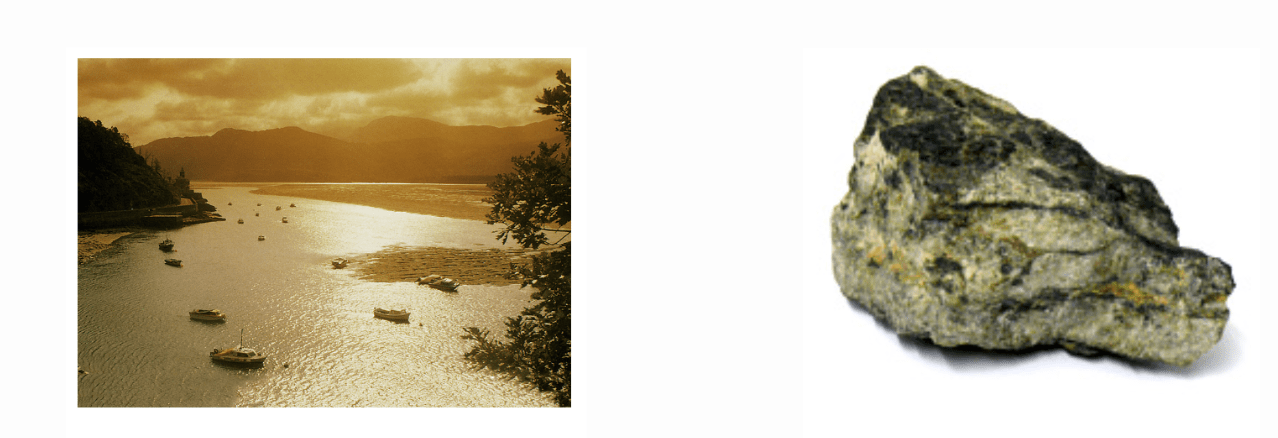
Below is an image of Afon Mawddach near where the Clogau mine is situated and a piece of rock from the Clogau mine containing traces of Welsh gold
At present, Welsh gold can be valued up to 30 times more than standard world gold
In 2017, 10 lots of Clogau gold, mined under government lease between 1979 and 1981, were auctioned with an estimate of about £9,000.
But after going under the hammer in Colwyn Bay, the lots went for £44,000. The auctioneer had been told by experts that Welsh gold was "visibly discernible" from other types and the "Clogau factor" could increase the selling price.
The smallest nugget weighing 3g (0.1oz) had a guide price of £600-£700 but sold for £4,000. The 16.26g (0.5oz) of gold flakes and dust was expected to fetch between £1,600 and £2,000 but went for £10,500.
The gold was mined from Clogau St David's after a farmer in the area, Jack Williams, approached Kerry John Thackwell and his father Ray. The pair came to Wales to mine in Gwynfynydd after working in Western Australia. Mr Williams told them he was the last miner to work in St David's in 1939 and could show the men where there were gold-bearing veins.
The men obtained a mining lease and extracted the gold over three years.
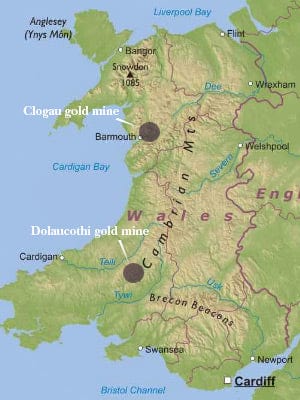
Where does Welsh gold come from?
Welsh gold occurs naturally in two distinct areas of Wales. One area is in North Wales in a band stretching from Barmouth, past Dolgellau and up towards Snowdonia. Several mines operated in this area, the largest of which were the Gwynfynydd mine near Ganllwyd and the Clogau St David's mine near Bontddu.
In South Wales, gold is found in a small area in the valley of the River Cothi at Dolaucothi where it is known to have been mined by the Romans.
Welsh gold was used to craft jewellery such as torcs – ceremonial bands worn around the neck by early Welsh princes and nobility.
Our Welsh Gold Promise
Our heritage evolved in the hills of Snowdonia when gold was found in the Clogau St David’s gold mine 150 years ago.
This mine was the largest and richest of its kind. The first major link between Welsh gold and the British Royal Family began in 1911 when Prince Edward was officially invested as Prince of Wales in a special ceremony at Caernarfon Castle on the fringes of Snowdonia, North Wales. Prince Edward’s regalia contained pure Welsh gold.
A gift of rare Welsh gold dating from the closure of the Clogau St David’s gold mine in 1911 has been used to create wedding rings for some members of the British Royal Family, a tradition that began in 1923 with Lady Elizabeth Bowes-Lyon, later Queen Elizabeth The Queen Mother, followed by Queen Elizabeth II, Princess Margaret, Princess Anne, and Princess Diana.
Other members of the Royal Family to have Welsh gold wedding rings include King Charles III and Camilla, Queen Consort; Catherine, Princess of Wales; and Meghan, Duchess of Sussex.
The Clogau brand was founded in 1989 with just five pieces of jewellery. Now, over 30 years later, we continue to celebrate our heritage with customers across the globe through iconic jewellery all containing rare Welsh gold – identifiable by the Welsh dragon and Clogau stamps.
Clogau jewellery is an heirloom with both a personal and cultural meaning – we hope your jewellery brings you many years of joy.
We certify that your piece of Clogau jewellery contains rare Welsh gold.
Statement from the Edinburgh Assay Office on the content of Welsh gold in Clogau jewellery
The Clogau St David's Gold Mine
The Clogau St David's gold mine was once the largest and richest of all the gold mines in the Dolgellau area. It is situated in Bontddu, near Barmouth, in Gwynedd, North Wales.
After producing copper and a little lead for a number of years, the mine developed into gold production in the 1862 "rush" and continued as a major operator until 1911, during which 165,031 tons of gold ore was mined resulting in 78,507 troy ounces (2,442 kg) of gold.
The Clogau Gold Mine worked the St David's lode of Clogau mountain alongside the co-owned Vigra Mine.
Since 1911 the mine has been re-opened several times for smaller-scale operations.
It last closed in 1998. In 1999 the mine was taken over and held by a local exploration company.
In November 2010 the mine was acquired by a new exploration company, who hope to restore the mine to production.
Within every piece of Clogau jewellery is rare Welsh gold from the Clogau St. David’s Gold Mine in Bontddu (“bont-thee”). This is undoubtedly one of the rarest, most expensive and most sought-after golds in the world.
During the early 20th Century, the Clogau mine was Britain’s largest and richest gold mine — producing nearly 2.5 tonnes of gold between 1862 and 1911.
For over 150 years, the mine went through mixed fortunes with the gold veins being most inconsistent and difficult to locate.
By the late 1990s however, the last train carrying Welsh gold from the Clogau mine clanked to a halt. One of the miners at the Clogau mine once said:
Finding gold in most mines around the world is like finding the cream in a sponge cake.
Finding Welsh gold on the other hand is like finding the sixpence in the biggest Christmas cake you could imagine.
There’s no pattern, no logic, and you never know when you’re just inches away.
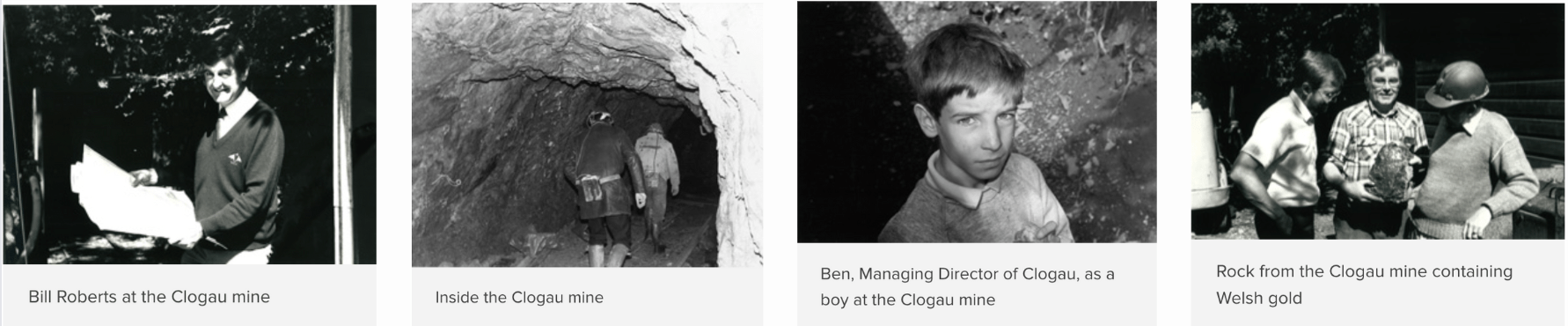
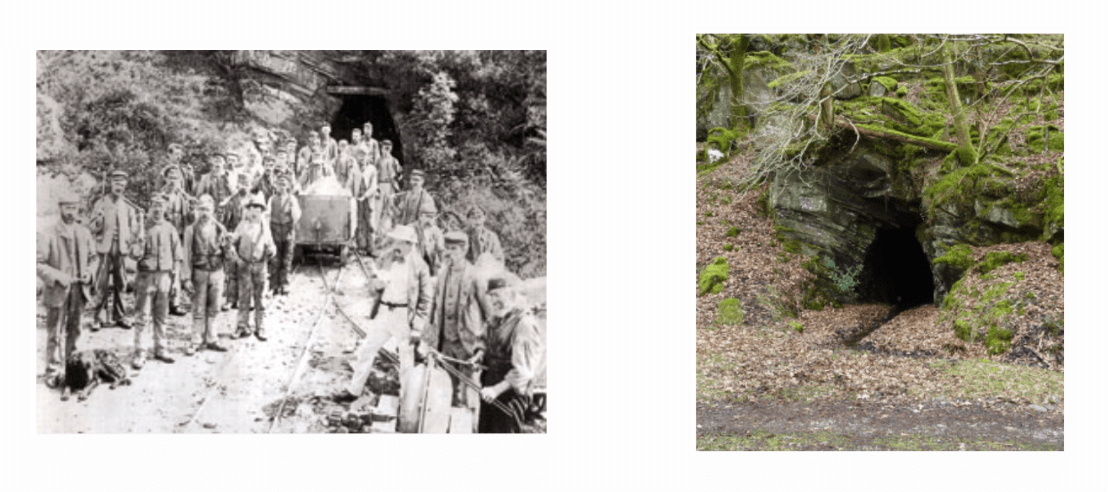
Below shows the workers at the Clogau mine and the entrance to the Clogau mine today
The Gwynfynydd Gold Mine
The Gwynfynydd gold mine in Dolgellau closed in 1999. In January 2007, the BBC and other news organisations reported that the final traces of "economically extractable" gold had been removed from the mines and surrounding spoil. Even the local road surface had been filtered for traces, marking the end of the current mining operation.
Gwynfynydd was discovered in 1860, and produced over 45,000 troy ounces of Welsh gold from 1884 onwards.
Queen Elizabeth II was presented with a kilogram ingot of Welsh gold from this mine in April 1986, on her 60th birthday.
In the 1990s the mine was opened to the public for guided tours which included the opportunity to pan for gold.
How We Discovered Welsh Gold and How We Use It
In 1989, the abandoned Clogau St David’s gold mine was rediscovered by William Roberts. William wanted to re-open the mine as a tourist attraction – an idea that was overturned by the Snowdonia National Park Authority.
As a result, William decided to gamble on the idea that there would be more gold within the mine. Luckily, there was, and a few years' worth of small-scale mining began in 1992 during which precious rose-coloured gold began to be extracted.
To make the best use of this magnificent gold, William decided to produce jewellery of the utmost quality, using the natural beauty and history of Wales as his design inspirations.
The miners who worked the Clogau St David's site were the direct descendants of the original miners who first struck gold there in 1854 deep in the 12 miles of caverns inside the Snowdonia hillside.
Initially, in 1989, just five lines of jewellery were created. In 1992 Clogau Gold of Wales Ltd was founded.
The precious yellow metal extracted from the Clogau St David’s mine is one of the rarest golds in the world. It is included within every piece of Clogau jewellery. Environmentally minded, Clogau separated out the gold using water from the adjacent crystalline streams.
William and his wife Margaret spent many hours carefully designing these beautiful and collectable pieces, along with their full-time designers and craftsmen.
With no gold mining taking place in Wales today, Welsh gold supplies will eventually run out, making it possibly the rarest gold in the world. Due to the scarcity of Welsh gold, only a small amount is included within each piece of Clogau jewellery. This ensures the longevity of Welsh gold supplies, and Clogau's affordability.